


サナズ・クーシャ
フローサイトメトリーの科学者
ブログ記事「干し草の山で針を見つける:腫瘍学におけるMRD検出におけるフローサイトメトリーの力」
作成日:2025年11月19日
サナズ・クーシャ
フローサイトメトリーの科学者
数十年にわたり、腫瘍内科医たちはパラドックスに取り組んできた。完全な形態的寛解状態にあるように見える患者は、数か月後または数年後に再発する可能性がある。原因は今や広く認識されている。顕微鏡や細胞科学など、従来の検出方法の検出基準を下回る、少数の悪性細胞が治療を生き延びることである。これらの残存悪性細胞は、目に見えない希少ではあるが、再増殖能力を持ち、病気の再発を引き起こす能力を持っている。この観察から、最小(または測定可能な)残存疾患(MRD)という概念が現れた。
本ブログ記事では、フローサイトメトリーが臨床現場でMRDを評価する上で果たす重要な役割や、MRD検出のためのフローサイトメトリー(FCM)アッセイを作成する際に留意すべきいくつかの原理について考察する。
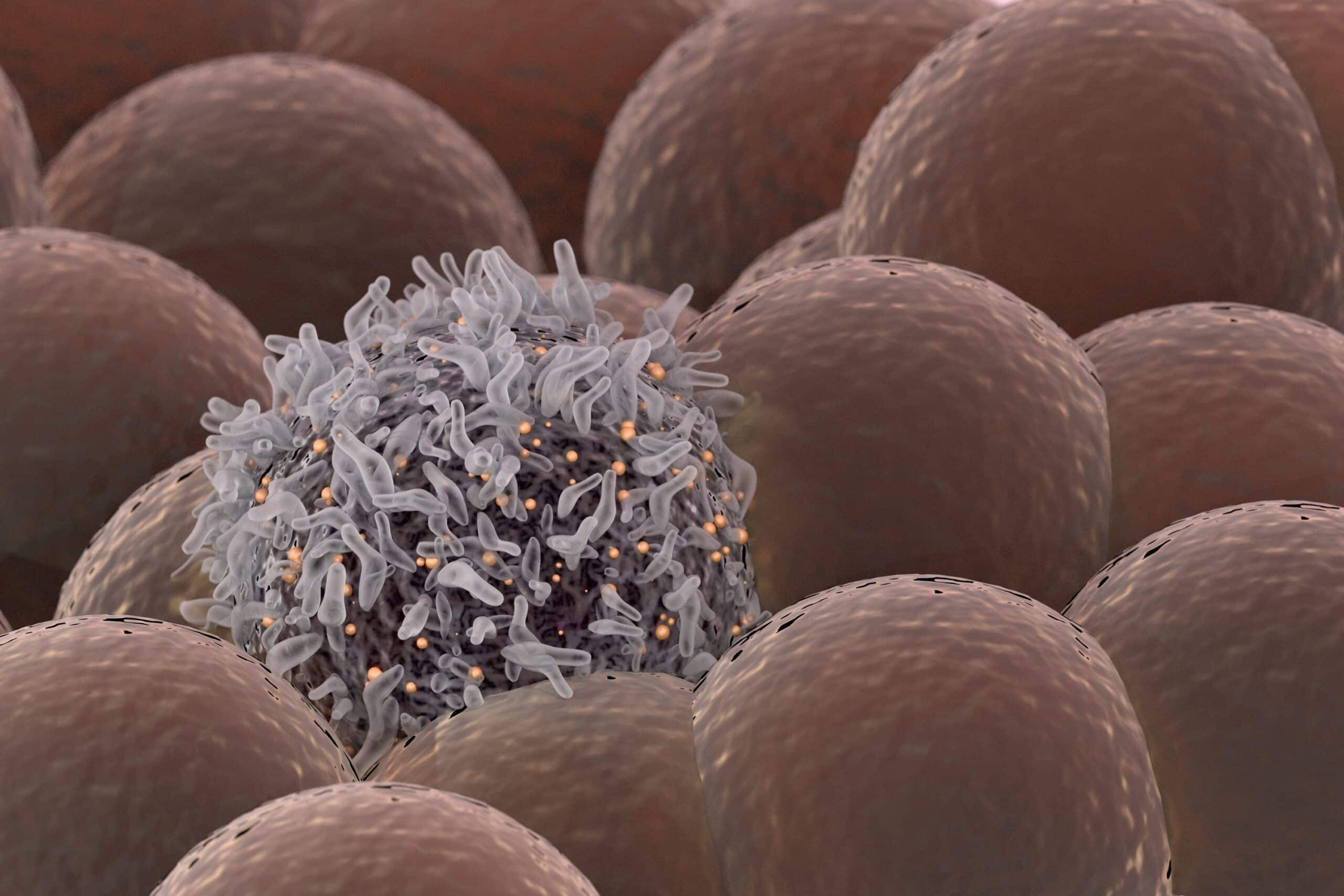
急性リンパ芽球性白血病(ALL)や急性骨髄性白血病(AML)などの血液学的悪性腫瘍において、MRDは通常、骨髄における治療後、あるいは時折末梢血液中に残る白血病細胞の割合を指す。これは、健康な細胞で10〜4(0.01%、または1万の健康な細胞で白血病細胞)、または10万細胞で白血病細胞1株(0.05%、または白血病細胞1)のレベルで見られることが多い。
These cut-offs, while seemingly arbitrary, have been found to be useful metrics in guiding treatment decisions, influencing whether therapy should continue, intensify, or stop. In multiple myeloma (MM), being MRD-negative by FCM lowers the risk of disease progression by 80–90%. In AML, being MRD-positive by FCM is linked to a higher chance of relapses and shorter survival. When a patient remains MRD-positive after induction or consolidation, clinicians may intensify treatment, move to stem cell transplant, or add maintenance therapy. When a patient remains MRD-negative (determined by high-sensitivity assay), treatment may be reduced, lowering side effects, costs, and monitoring needs1.
The first systematic studies of MRD were conducted in the late 1980s and early 1990s at academic research institutions such as St. Jude Children’s Research Hospital. Investigators such as Giuseppe Campana and Ching-Hon Pui demonstrated that patients in apparent complete remission still harbored residual leukemic cells detectable by sensitive assays and that the presence of such cells strongly correlated with relapse3. Researchers and clinicians built on these insights and transformed MRD from a laboratory phenomenon into a prognostically useful biomarker.
Today, the detection of MRD has become integral to therapeutic decision-making, especially in the clinical settings of B-ALL and MM. Regulatory authorities — such as the U.S. Food and Drug Administration (FDA) and European Medicines Agency (EMA) — now accept MRD as a valid surrogate endpoint in clinical trials of new therapies for these diseases, accelerating drug development and approval.
Detecting such low-frequency events demands highly sensitive assays such as FCM, PCR, and next-generation sequencing (NGS). Among these, multiparametric flow cytometry is one of the most widely used methods for MRD detection because it is broadly available in clinical laboratories, can be performed rapidly, and directly profiles protein expression at the single-cell level rather than inferring it from DNA sequences4. However, one of flow cytometry’s greatest strengths is its broad applicability across different patient types. Unlike PCR or NGS, FCM doesn’t need a known genetic target to effectively detect cancer cells. Instead, FCM assays are designed to identify unusual patterns of protein expression markers on the surface of cells, using a “difference from normal” approach. Because of that, FCM can be used even when no tumor-specific molecular marker is available, like in newly diagnosed patients or diseases driven by many different mutations.
それでも、FCMは完璧ではない。新鮮で高品質なサンプルと最も効果的に対応します。なぜなら、細胞は生存を保ち、表面マーカーをそのまま維持する必要があるからです。また、結果を解釈するには、熟練した専門家や高度なソフトウェアが必要です。最後に、FCMベースのMRD検査は、他の疾患よりも一部の疾患に対してより効果的である。B-ALLでは、標準化されたパネルが希少な残留細胞を高精度で検出できるため、MRDは治療の意思決定や結果予測の強力なガイドとなる。MMでは、依然として強力ですが、骨髄の断片的なサンプリングや体外拡散により病気を見逃す可能性があります。1FMLにおけるFCMは、抗原発現が変化し、正常な再生細胞と重なるため、AMLにおいて困難である。
これらの制限を認識することで、FCMベースのMRD分析における主要なステップを理解するための段階が整う。
Let’s go step by step through how MRD is assessed using FCM and highlight what really drives its sensitivity, consistency, and clinical impact.
The selection of the antibody/fluorochrome combination is critical in panel design. Every FCM-based MRD panel starts with backbone markers that map the hematopoietic landscape, such as CD45, CD34/CD38, CD19 and CD3. Onto this framework, disease-specific markers are layered to uncover aberrancies, for example:
Through a well-designed panel, rare malignant cells can be detected among millions of normal cells.
To achieve this detection in practice, we need to test and understand the limits of our assay, or its sensitivity.
MRDアッセイの感度は、検出限界値(LLoD)と定量化限界(LLoQ)という2つのコア指標に依存する。LLoDは、アッセイにおける特定の細胞集団のマーカーが存在しない場合に観測された最高の信号であり、つまり、サンプルの背景の「ノイズ」と区別できる最小の異常細胞である。関連して、LLoQは許容可能な精度で検出可能な細胞の中で最も低い相対数である(前述のように、ほとんどのアッセイでは通常0.01~0.001%)。これらはどちらも、私たちが装置上で取得する細胞の数や質と本質的に関連している。
たとえば、50個の細胞のLLoDと0.01%のLLoQを持つと確認されたアッセイがあるとします。0.01%の異常細胞を持つサンプルをMRD+と自信を持って分類するには、LLoDおよびLLoQの閾値を超えるために少なくとも50万個の細胞を取得する必要がある。細胞をさらに多く取得すれば、理論上はLLoQを0.001%(10〜5)まで拡張できる。実際、Jum'ahらによる最近のMRD検証研究では、AML 5MRDフローサイトメトリーアッセイが0.01%のLLoQを達成し、高イベント取得条件下では理論上の上限が約0.005%に達したと報告している。ユーロフロー・コンソーシアムのB-ALL 4MRD検出に関するガイドラインは、この高い検出レベルが必要であれば、400万件以上のイベントを取得することを正式に推奨しています。
理論的な標的にかかわらず、感度の任意のレベルでMRDを検出するには、優れた検体が始まります。骨髄吸引(BMA)は、血液中の悪性腫瘍の大部分において、高品質で末梢血による希釈を行わなければならないというゴールドスタンダードであり、この現象は一般的に「ヘモディリューション」と呼ばれる。ヘモディリューションは、末梢血液中の細胞を用いて骨髄の悪性細胞を希釈することで、MRD検出を妨害し、濃度を低下させ、偽陰性または誤解を招く結果をもたらす可能性がある。
Sample integrity, including timely processing and adequate cellularity, is essential for accurate detection1. Instrument performance must also be finely tuned to support this precision: stable lasers, optimal fluorochrome combinations, and accurate compensation are crucial to clearly distinguishing rare malignant cells from normal ones. Finally, proper handling and storage of your sample will help preserve marker expression and ensure reliable MRD assessment.
Data analysis for MRD assays focuses on distinguishing residual malignant cells from normal regenerating cells using abnormal marker expression patterns. Each hematologic disease has its own immunophenotypic fingerprint, and disease-specific abnormalities are often referred to as LAIPs (leukemia-associated immunophenotypes). Backbone markers (CD45, CD34, CD19, CD3) define broad lineages, while LAIP-associated markers (CD10, CD58, CD81 in B-ALL; CD117, CD123, CD7 in AML) help separate abnormal from normal populations. Aberrant expression such as loss, overexpression, or cross-lineage marker presence is a key clue that defines MRD-positive cells. The analysis requires expert gating or automated algorithms to visualize and confirm these rare populations, ensuring that the detected cells are not artifacts.
データ分析と解釈に関する一貫した基準は、MRD検査が実験室間および臨床環境全体で同等の結果をもたらすことを保証するために極めて重要である。欧州白血病ネットワーク(ELN)やユーロフロー・コンソーシアムなどの組織は、多施設共同試験のデータおよびFCMおよび分子アプローチの両方を統合し、これらの基準を開発および改良しています。分析的調和の取り組みは、パネル設計、取得深度、およびゲート戦略の整合性に重点を置いているのに対し、臨床標準化の取り組みは、MRDのポジティブ性またはネガティブ性に関する共通の閾値を定義している。
これらのステップを組み合わせることで、MRDは技術的測定から、患者管理のための信頼性の高い臨床ツールへと変化する。
MRDを検出するためのツールは進化を続けており、従来のフローサイトメトリーを超えて、スペクトルフローサイトメトリーなどのより高度なプラットフォームへと移行しています。これらの革新に加えて、計算アルゴリズムは複雑なデータを分析し、精度を高め、かつては検出が困難だった疾患信号を明らかにするために不可欠になりつつある。
Spectral Flow Cytometry:スペクトルフローサイトメトリー:この方法は、固定チャネルではなく各フルエミッションスペクトルを捕捉し、サンプル量が少なく、マーカー分解能も向上する、1つのチューブ内のより大きなパネルを使用できる。5AMLでは、1本のチューブ19色のスペクトルパネルが5管のユーロフローAMLアッセイと一致し、新たな異常パターンも検出された。
計算および機械学習(ML)ツール:パネルやイベント数が増えるにつれて、手動ゲートはもはや実用的ではなくなっています。MLアルゴリズムは、希少な異常な集団を自動的に検出するのに役立つようになりました。6最近の研究では、変圧器ベースのニューラルネットワークがFCMデータ6におけるMRD検出を改善することが示されている。
要するに、MRDは実際の臨床的価値を持つ重要なバイオマーカーとなっている。FCMは、高速で広く利用可能であり、単一細胞レベルの情報を提供するため、MRD検出において依然として中心的な存在です。その精度は、サンプル品質やパネル設計から機器のセットアップ、データ解析に至るまで、あらゆる段階によって異なります。分光フローサイトメトリーや計算解析といった新しいツールが、感度と一貫性を高めている。
FCM、免疫療法、および稀な事象に注力する研究者にとって、MRDは技術的課題と新たな科学的機会の両方をもたらしている。残存病態生物学と治療反応および患者の治療結果を結びつける。要するに、MRDは単なる数字ではなく、治療の効果をリアルタイムで捉えるものである。
参考文献
サナズ・クーシャ
サナズは、ニューヨークを拠点とするHBRIのフローサイトメトリーチームの科学者です。彼女はペンシルベニア大学ペレルマン医学部でポスドク研究員を修了した後、2023年にHBRIに入社した。彼女はマラヤ大学でバイオテクノロジーの博士号を取得しています。彼女の専門分野は、フローサイトメトリー、CAR-T細胞療法の開発、腫瘍微小環境研究、およびがん創薬に及んでいる。

